


Every rider dreams of the day they can dive into legendary Japanese powder – and Baša Števulová made that dream come true! Together with a crew of friends, she explored freeride paradises in Hokkaido and Hakuba, experienced the legendary Asahidake, hiked up volcanoes, and ended each day relaxing in traditional onsens. In this interview, she reveals what surprised her about Japan, where the best riding spots are, how much a trip like this costs, and what you definitely shouldn’t forget if you're planning to go there too.
What were your first impressions upon arriving in Japan?
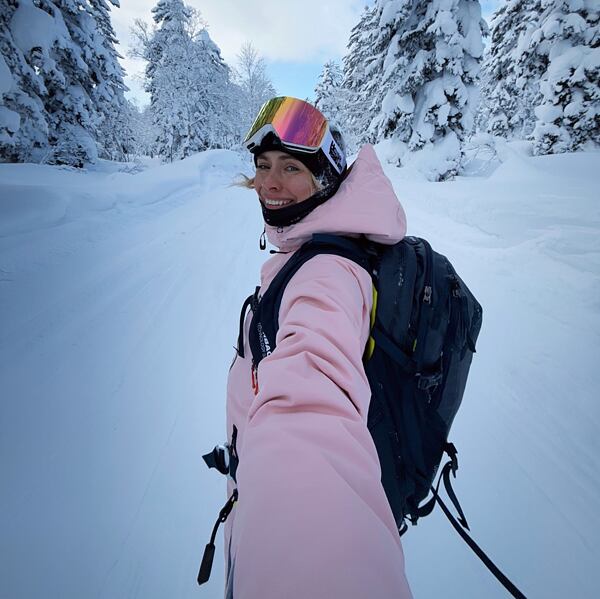
I had been looking forward to this trip for so long, and when we finally got there, it was a total mind-blow moment—I couldn’t believe I was actually in Japan. We kept laughing about the fact that we were really standing there, and it looked exactly like it does on Instagram. The snow, the atmosphere, everything. It was just what we expected.
The first week, we still got some fresh snowfall, then there was a longer break, but the conditions were still amazing. And now, another insane snowstorm has hit—it's all over the media, transportation is paralyzed, and 130 cm of fresh snow has dropped. We missed that madness, but even so, we had an absolutely unreal ride.
Who were you there with, and how long did you stay?
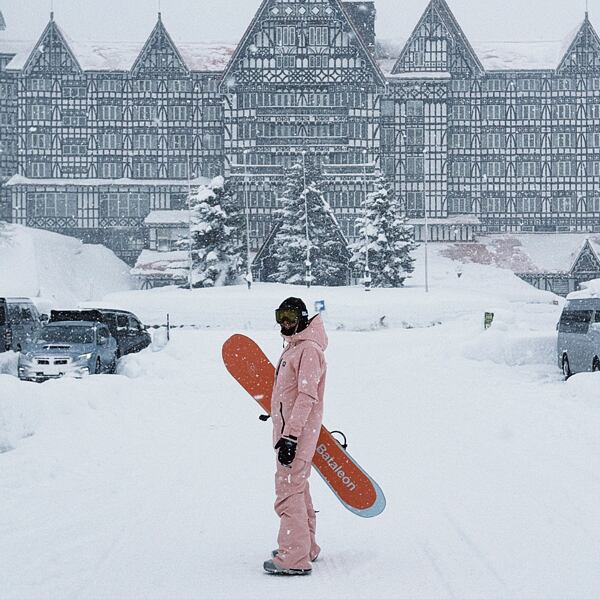
We went as a crew of four friends, and one of us had already been to Japan multiple times, so we had a pretty solid plan of what we wanted to do. At first, it looked like I might even go solo, but in the end, things just came together, and we decided to go as a group. Our first stop was Hokkaido, where we all planned to stay for a week. Originally, part of the crew was supposed to head back home after that, while the rest of us, including me, were going to stay longer. But in true spontaneous fashion, they ended up rebooking their flights, and one morning, we just decided to leave Hokkaido and move to the main island, Hakuba. The entire trip lasted 17 days—10 days of non-stop riding and 4 days in Tokyo, making it the perfect mix of a snowboarding marathon and sightseeing adventures.
You mentioned that it snowed during your first week. Just to get an idea, how many centimeters of snow fell overnight?
An insane amount! When we were in Hakuba, around 90–100 cm of snow fell overnight. Maybe the snow in Hakuba isn’t as dry as in Hokkaido, but it was still absolutely unreal. Pure powder paradise!
So, is it true that the snow in Hokkaido is unlike anywhere else in the world?
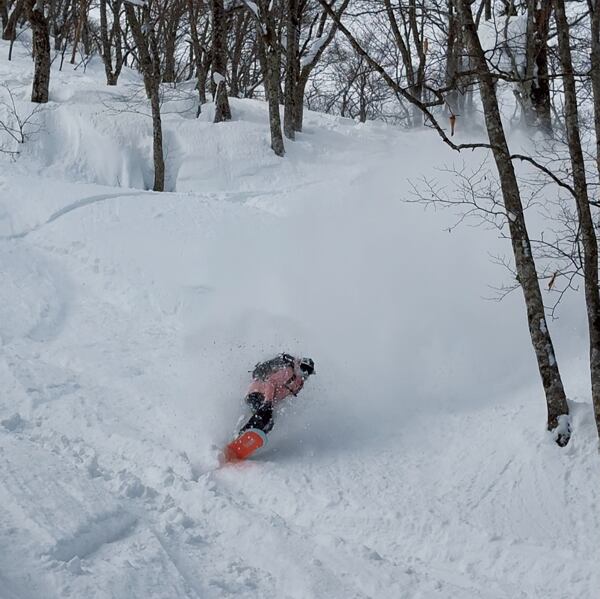
Yeah, 100%! It’s super light, fluffy, like a cloud. We were talking about whether we had ever ridden in snow like that before. I think maybe once—way back in Turkey, I remember saying I had never experienced anything like that. So that might have been comparable. But honestly, winters in Europe just aren’t what they used to be… So if you want to experience real, mind-blowing powder, Japan is the way to go, haha!
Did you have a pre-planned itinerary of what you wanted to see and where to ride?
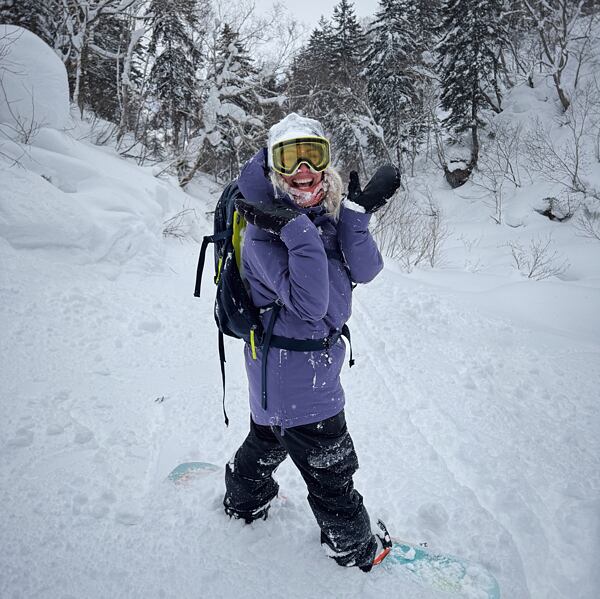
Yeah, we did. The main rule was to avoid Niseko—we didn’t want to go to the resort or even that area. So right from the start, we headed to the Furano region, which I think is the second-largest city in Hokkaido. There’s a big ski resort there, and the surrounding area has amazing backcountry touring options. We had guides booked through Yukiumi (@yukiumi_house on IG). They’re a group of Spaniards who have been living there for about five years. You can stay at their lodge, which includes daily guiding, or just book a guide for a single day. The price was around €590 per day, but since there were four of us, we split the cost, and it was pretty reasonable. One guide takes a max of four people. Having a guide there is a game-changer if you don’t want to just ride powder in the resort—where you might not even know the best spots. It’s super easy to end up at the bottom of some random creek and then have to hike back up for an hour. So yeah, it’s definitely worth having someone who knows the terrain!
Did you ride resorts, or was it all backcountry touring?
We rode resorts too—Furano, Hakuba, and Myoko. We also stopped by a smaller resort, Tomamu, on our way toward Niseko. But honestly, I wasn’t super stoked about Niseko and its big resorts. It’s not that I was disappointed—I just didn’t have any expectations because I knew it would be super touristy. And it totally was. Tons of Australians, a bunch of Gen Z party crowds, so that real Japanese vibe was kinda lost. That’s why we decided to move on. Since we were already in Niseko, we opted for touring instead—we climbed Mount Yotei, and for a day, we rented snowmobiles from @snowmobile_niseko and rode them all day. After so many days of hiking up, it was actually pretty nice to just get a lift for once instead of grinding our way up every time. But if you want to ride places where no one has been before you, touring is a must. It really depends on what you expect from your trip. I was ready for it, so I brought both my splitboard and a regular board to be prepared for anything.
Which place did you enjoy the most for riding, and why?
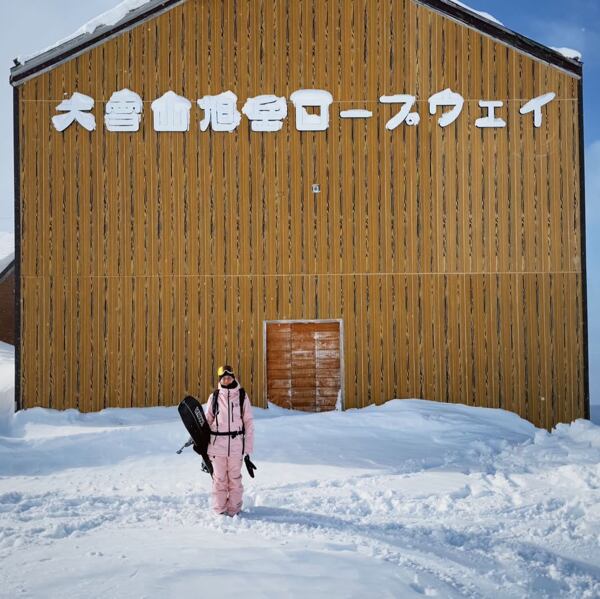
Furano on Hokkaido was definitely my favorite. The town itself is pretty provincial—nothing too special compared to Myoko on the main island—but for riding, it was top-notch. I felt like there weren’t as many people there as in Niseko, so we really got to enjoy it. If I were to go back to Japan, I’d definitely head to Furano again. It was seriously amazing!
I noticed you hiked up an active volcano…
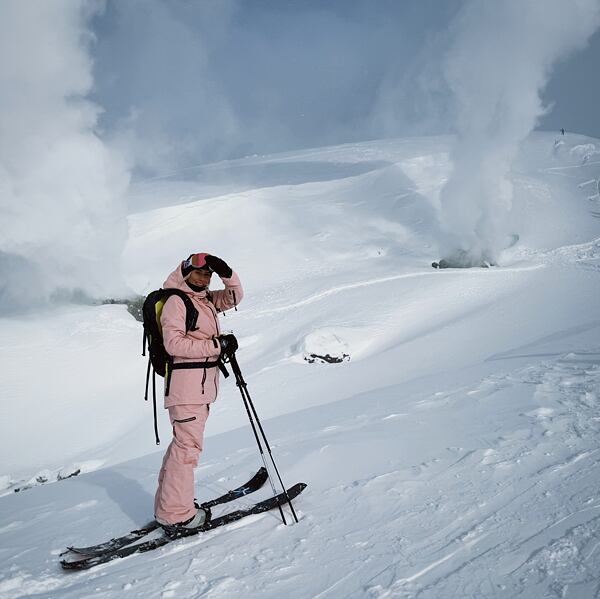
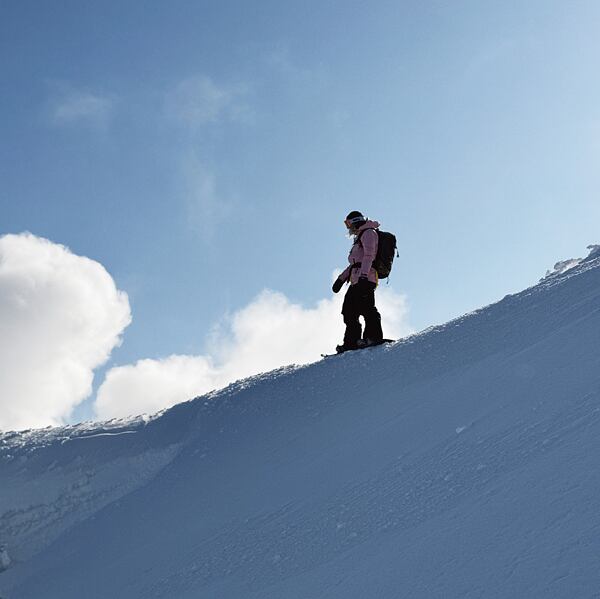
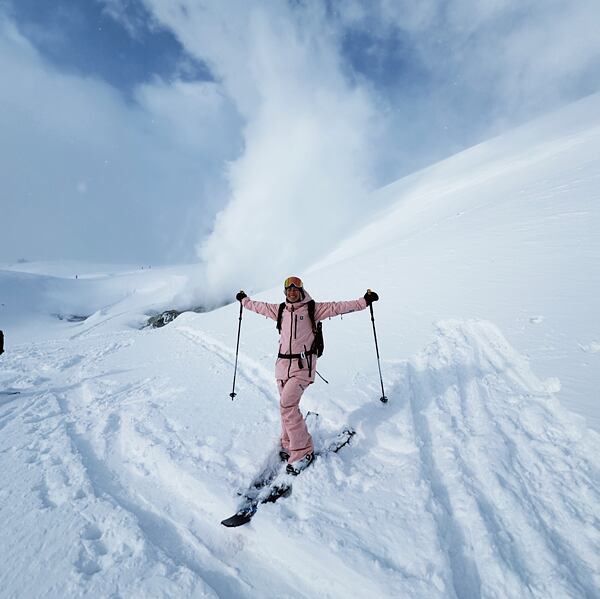
Yes! On Hokkaido, we climbed Mount Yotei, which is also a volcano. Some sources say it’s active, others say it’s dormant—so honestly, I’m not entirely sure myself. Besides that, we also went to Asahidake, which is a super Instagram-famous spot. Pretty much everyone who goes to Hokkaido ends up there sooner or later. There’s only one lift, no groomed slopes, so people come purely for the powder. The most iconic thing about it is the volcanic vents spewing out stinky sulfur steam. If you’re riding there, you usually hike up to see the vents up close, and then you just lap the one massive gondola that drops you off above the treeline—then it's nonstop riding from there. And again, having a guide there is a huge plus so you know where you’re going and where you’ll end up. In Asahidake, they even recommend it because if you don’t know the terrain, you can easily get lost and end up somewhere you really don’t want to be.
What’s a must-have for riding Japanese powder?
Snacks – Hiking and riding deep snow is exhausting, and a hungry rider is not a happy rider. Full avalanche gear – No compromises! A lot of people think avalanches don’t happen in tree runs, but that’s a myth. They do, so you always need to have your safety gear with you. Electric avalanche backpack – If you’re planning to travel with a traditional airbag system that uses a gas canister, there’s a chance airport security might confiscate it. An electric system is a safer bet. If you want to ride the best powder, you have to be prepared—for the conditions, the terrain, and the fact that you’re out in the wild, far from any resort.
You mentioned that you booked guides in advance. Where’s the best place to find them?
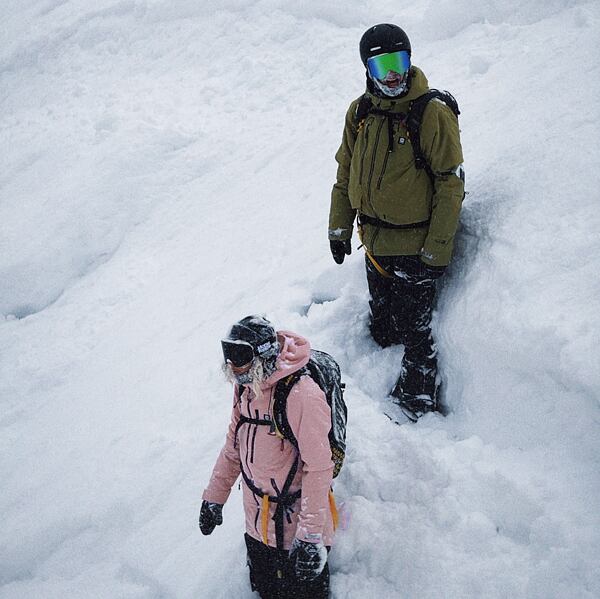
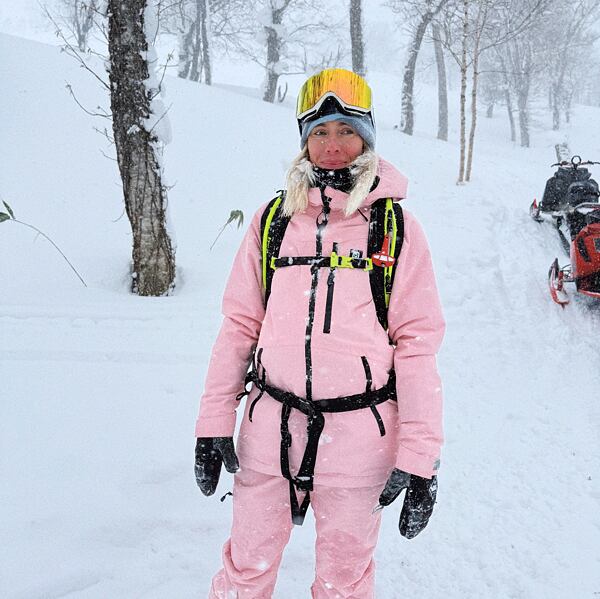
The best way is to just Google them or find and contact them on Instagram. We messaged our guides about two weeks before the trip, and based on their availability, we planned which days we’d ride with them and which days we’d go on our own. You can also book a full week, have a guide every day, and stay at their lodge—that comes out to around €3,500. Of course, it depends on who you go with because Japan has tons of options, from big guiding agencies to smaller local guides. With the guys from Yukiumi, it was seriously awesome—I really enjoyed it. If I went back to Furano, I might even go solo and book directly with them again. Totally worth it!
Are these guides tied to a specific location, or can one guide take you around the whole island?
The guides from Yukiumi are mainly based in Furano and its surrounding areas within a 2–3 hour drive. So, many mornings, we’d wake up early, jump in the car, drive for two hours, and then start hiking—whether it was Asahidake, Mount Furano, or somewhere else. With them, you can ride directly in the resort, or you can go completely off the grid and hike for untouched powder. It really depends on what you want and where the best conditions are that day.
Was there a moment that really stuck with you when you thought, "This is it!"?
There were so many of those moments. Every single day felt like a huge experience, and honestly, it’s hard to pick just one highlight. Every time we stood in deep powder, hiked up, and then dropped into completely untouched snow, I kept thinking: “Yep, this is it!”
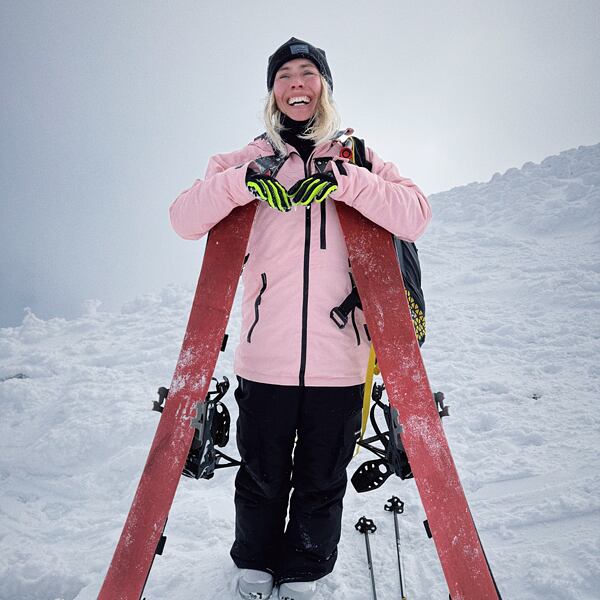
Did you experience anything unpleasant?
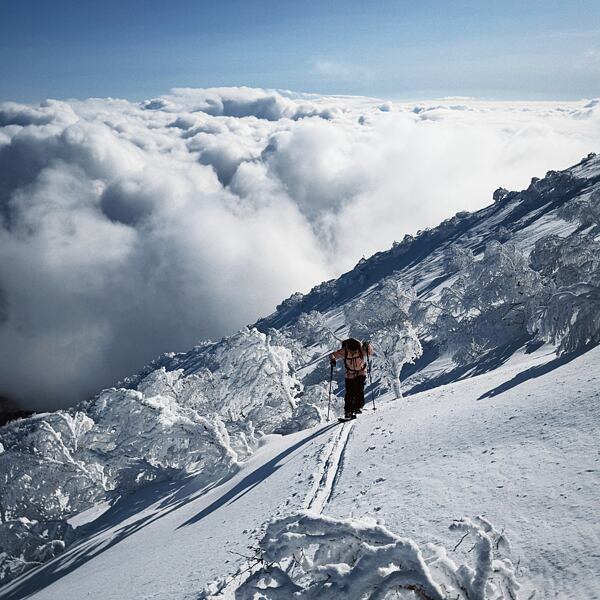
Yeah, we had one mini screw-up with our guide. We were hiking up Mount Furano—did one climb, rode down a couloir, crossed a ridge, and kept descending another chute. But then we ended up in a completely sketchy funnel-shaped gully that dead-ended at a 10-meter frozen waterfall. Basically, there was no way out. Hiking back up wasn’t an option either because we could’ve triggered an avalanche—and that was not a situation we wanted to be in. At that moment, I had this brief urge to send my live location to Tomáš (my partner) so he’d know where we were… you know, just in case. In the end, we were stuck there for about an hour and a half until three skiers managed to find a way out over the rocks into a neighboring chute. They stomped out some kind of path with their skis, and we carefully followed them. We got out safely, but it was one of those moments where we thought, "Okay, this day could’ve ended very differently… But we’re all good, so no big deal."
How much does a trip like this cost?
When it comes to food, Japan is way cheaper than anywhere in Europe. The same goes for lift tickets—a full-day pass is around €30–35, whereas in Europe, you’d be paying at least €60–70. Even guiding was relatively cheaper than if you were planning a similar freeride trip in Europe or North America. The only thing that was comparable in price was accommodation, but even then, I think Japan still offered better value. Overall, it doesn’t even compare to a trip to Canada—Japan is definitely the more affordable option. If you want to fully enjoy the trip without major restrictions—meaning having guides, a rental car, accommodation, and food—you should budget around €5,000 for 17 days, including flights. Our flights cost around €900, including a board bag. We flew with Air China and booked about a month in advance.
What about food prices in stores and restaurants?
Grocery store prices were really low, definitely cheaper than in Europe. For example, a bottle of water at Tokyo airport cost €1, whereas at Vienna airport, you’d easily pay €5–6. So overall, everything was much more affordable there. What happens next year is hard to say—the Japanese yen is currently at a historic low, so we’ll see how things shift. But for now, Japan is absolutely worth the trip—the price-to-experience ratio is unbeatable.
Restaurant prices were either the same or even lower than at home, even at some premium places. My personal rule? The more local, the better—the small traditional spots were next level. Amazing food for amazing prices!
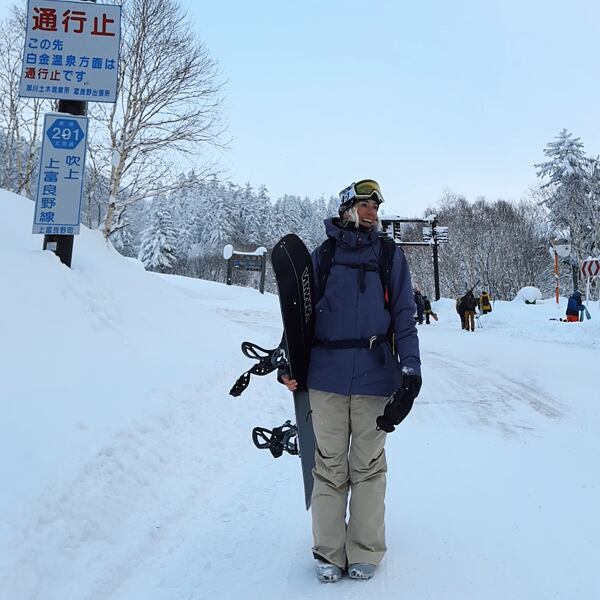
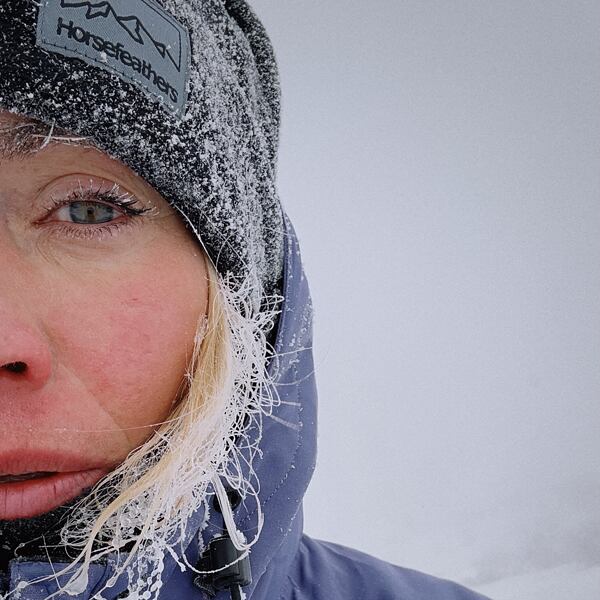
Did you try any traditional Japanese dishes?
Oh yeah! On our first day in Furano, we went to a restaurant—I think it was called Okonomiyaki. And honestly… I don’t even know how to properly describe what we ate, haha. They brought it out on a sizzling hot plate, and it was a lot—meat, eggs, and a bunch of other things I didn’t even have time to identify. I devoured the whole thing and thought, if I ate that much back home, I’d feel awful for two days straight. But in Japan? Nothing. Even when I totally stuffed myself, I never felt heavy or sick. So yeah, day one, and I already got a full-on Japanese welcome food experience!
Where did you look for information on accommodation, trips, and resorts?
Our main source was our friend Jakub, who had already been to Japan and had a lot of things mapped out. Besides that, I asked a bunch of friends who travel there regularly. They gave me tons of useful tips—where to go, what to avoid, where to start, where to rent a car… So thanks to their recommendations, we had a lot covered.
But not everything could be figured out through friends—like accommodation, which we had to find ourselves. Since we were moving around almost every day and rarely stayed in one place for more than two nights, we booked most of our stays last-minute via Airbnb and Booking.com.
A great tip for first-timers heading to Japan is to check out skier Malou Peterson’s Instagram account. She spends a lot of time there and offers a "Guide Book" on her profile with tons of helpful recommendations—from the best resorts and restaurants to onsens and accommodations. It's seriously great, and I’d recommend it to anyone looking to save time on research!
So, did you get around by car?
Yes! We rented a car at Sapporo airport, and financially, it worked out pretty well. In fact, we ended up returning it a week earlier than planned because we were moving to the main island—and surprisingly, they even refunded us for the unused days. If you’re planning to rent a car in Japan, keep in mind that you must have an international driver’s license—they won’t rent you a car without it. And of course, a credit card is a must, otherwise, no rental for you!
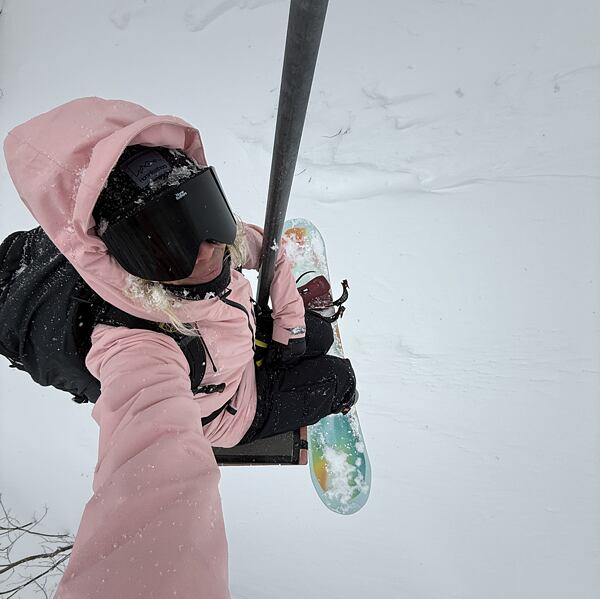
Was there anything about Japan that surprised you?
People have asked me a few times if I found Japan’s strict rules annoying or restrictive. But honestly, it didn’t bother me at all—quite the opposite. I think it’s great that these rules exist because with that many people, you need some kind of system; otherwise, it would be pure chaos. What fascinated me the most was how willingly the Japanese follow the rules. Compared to, say, Slovaks (who sometimes have a bit of a problem with that, haha), it was a total contrast. So yeah, I really liked it, and if I could go back, I’d do it again in a heartbeat!
Did you visit traditional Japanese onsens?
Yes, and honestly, I don’t think we could’ve survived without them! After riding—and especially after all that hiking—onsens were our daily lifesaver. Our routine was the same every day: ride, onsen, eat, sleep, repeat. We always hit an onsen for at least an hour after riding, grabbed some food, and then straight to bed. There wasn’t a single day we skipped it. Entry was around 600 yen (€3.60), so super affordable. Onsens are public but strictly separated for men and women—the mixed ones are mostly just for tourists. You go in completely naked, and there’s a strict process to follow. First, you thoroughly wash yourself in the shower area, where you get a ridiculous selection of shampoos, shower gels, and brushes. The Japanese take this part seriously—they’ll sit on tiny plastic stools and scrub themselves for half an hour before even stepping into the onsen. There are both indoor and outdoor onsens, and each one was an experience. The whole Hokkaido island is full of volcanoes, so the water in the onsens is naturally heated by magma. Absolutely perfect after a full day on the mountain!
What did you bring back from Japan for yourself and your family?
I mean, as a woman, it’s pretty obvious what I brought back—Japanese skincare! I stocked up on all kinds of face masks, creams, and beauty gadgets. For the kids, the usual—tons of sweets, candies, and toys—because, let’s be real, there’s no way I could come home without that. But honestly, I feel like no woman leaves Japan without a solid stash of skincare products. And since they’re super cheap there, it’s an even bigger win!
If you had to give three tips to someone planning a trip to Japan, what would they be?
1. Book a guide for at least one day – It’ll help you understand how everything works, where to ride, and what to expect. Even onsens have strict rules, and it’s super helpful to have someone explain them to you.
2. Learn at least some basics about Japanese culture – For example, blowing your nose in a restaurant is a huge no-go. Japan is a completely different world, and while they’re really tolerant of tourists, it’s nice to be prepared and know what (not) to do.
3. Be ready for the language barrier – English won’t get you very far, but both locals and tourists rely heavily on phone translators. That said, you’ll still often have no idea what you’re ordering in a restaurant, haha. But thanks to tech, communication is totally manageable.
And if anyone needs more tips, I’m happy to help!


